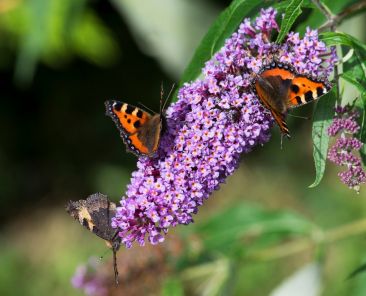
Guide to Growing Butterfly Bushes in New Jersey You can attract hummingbirds, butterflies, and other local pollinators to your New…
Viburnum — Very diverse group, specimen or border planting, great berries. Good food, cover, and nesting. Great fall color.
Cotoneaster — Many varieties, low to medium height. Great for groupings, colorful berries. Good food, cover, and fall color.
Winterberry Holly — Medium to large growing, great for borders. Best fall berry show in the landscape. Good food, cover, and nesting.
Trumpet Vine — Fast growing vine loaded with flowers throughout the summer. Particularly attractive to hummingbirds.
Flowering Crab Apples — Loads of varieties and colors. Excellent smaller ornamental tree with flowers and fruit. Great for food, good for cover, and nesting.
Juniper varieties — Tough evergreen, various heights from prostrate to upright. Excellent ground cover or hedging plant. Good for food, cover, and nesting.
Weigela florida varieties — A number of varieties that bloom profusely. Ideal for hedging and borders. Easy to grow and disease free. Attracts hummingbirds. Good cover and nesting.
Rosa rugosa hybrids — Extremely hardy, great for mass plantings. Profuse flowers, heavily fruited with rose hips. Good for food and cover.
Ornamental Grasses — Many superb landscape varieties. Seed heads prized for beauty and form. Great in masses or as specimen plants. Good for food and cover.
Dogwoods (shrub and tree forms) – Very diverse group of plants. Attractive in landscape for bark color, flowers and berries. Great for food, good for cover and nesting.
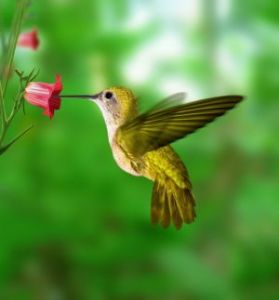
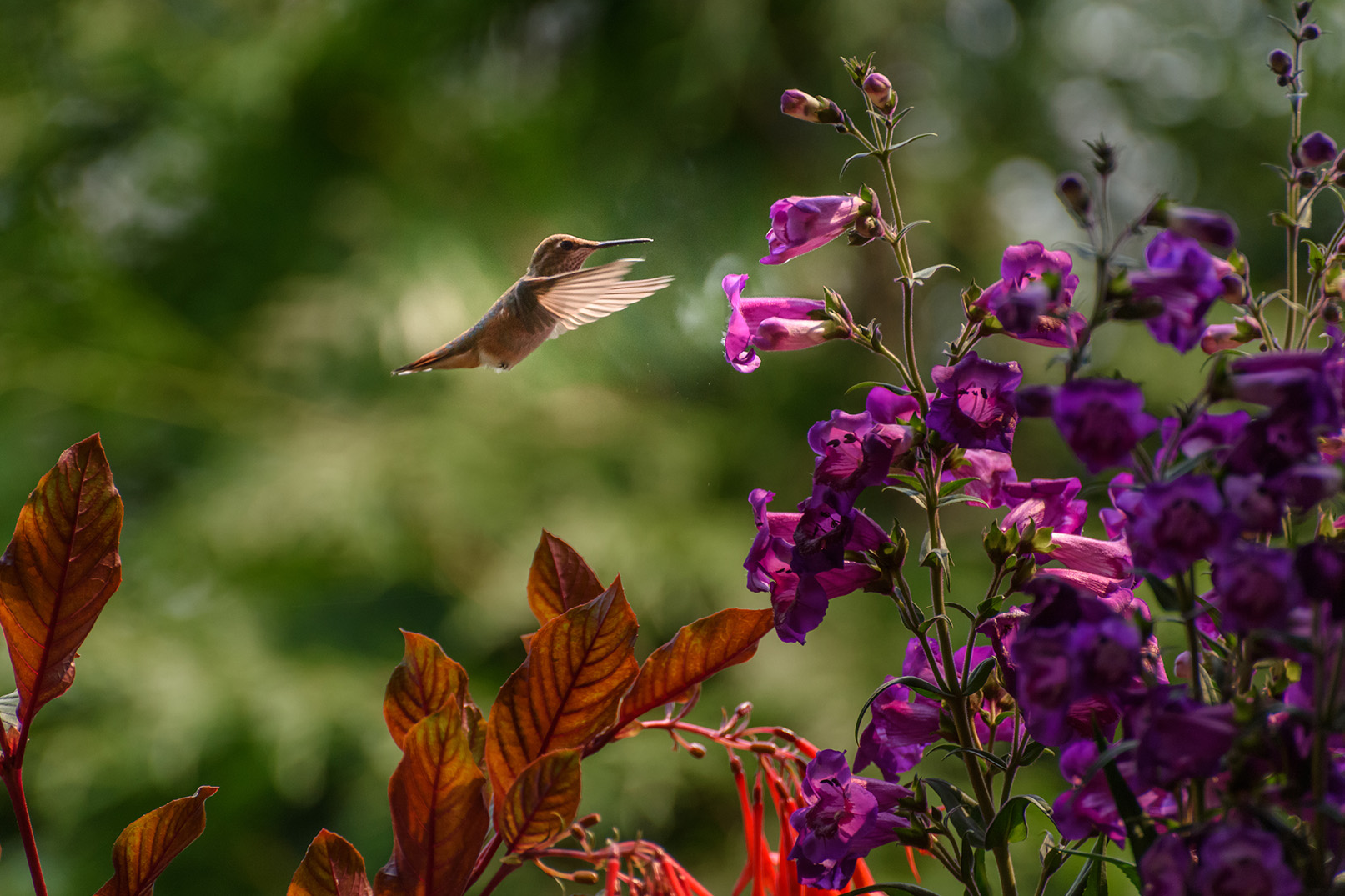
Their shining iridescent colors and “humming of wings” make hummingbirds among the most beautiful and fascinating birds to attract. The Ruby-Throated Hummingbird is the only species of hummingbird found in northern New Jersey. Male Ruby-Throated Hummingbirds have a brilliant, metallic-red throat that can appear black in the shade, while females have a white throat. Both have bright iridescent green backs and wings.
Habitat
The Ruby-Throated Hummingbird is the only Hummingbird that breeds in the eastern US. Hummingbirds migrate seasonally and are attracted to woodland edges and openings near streams where their favorite nectar producing plants grow. The nectar provides the necessary energy for the Hummingbird’s rapid flight movement — a Hummingbird may beat its wings up to 75 times per second.
Feeding
Although Hummingbirds feed from nectar-bearing flowers of all colors, they are mainly attracted to bright red, pink, and orange tubular flowers. The most important thing you can do to attract these birds to your garden is to plant flowering annuals, perennials, shrubs, and trees.
Also, these birds will eagerly come to special feeders that are stocked with sugar water. There are several models of Hummingbird feeders available to suit your budget and taste. It’s recommended to fill the feeders daily, with fresh “nectar solution.” Every four to five days clean the feeder thoroughly with hot water and a little vinegar to prevent mold establishment. Scrub the feeder with a bottle brush and rinse thoroughly before refilling.
Recommended Plants
The following garden plants provide color and nectar that can help attract Hummingbirds to your garden:
A garden with a combination of these flowers (and a nectar feeder!) can assist in attracting these unique birds to your garden.
All of these annuals and perennials are available at Rutgers Nursery in their respective seasons. Our staff is always willing to assist in all of your gardening projects.
Happy Hummingbird Watching!
Guide to Growing Butterfly Bushes in New Jersey You can attract hummingbirds, butterflies, and other local pollinators to your New…
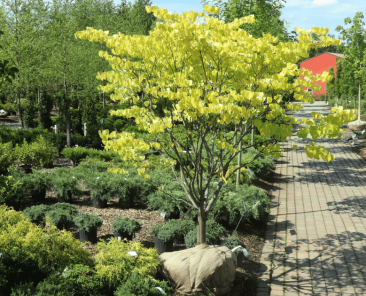
We plant year-round at Rutgers Nursery for 40 years with success— even in the Summer! Our nursery-grown perennial plants can be successfully…

Plant trees to help reduce the Greenhouse Effect while reducing your air conditioning needs up to 30 percent, and thereby reducing…