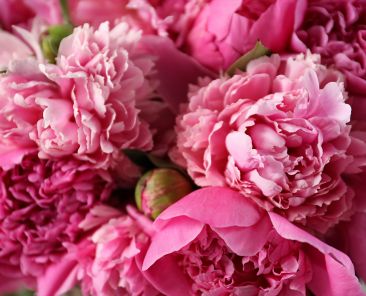
Site Selection Please take time to prepare your planting area. In return you will receive a lifetime of enjoyment. In…



With a little bit of imagination, there’s no end to how you can use roses in the landscape! Roses come in a tremendous variety of sizes, colors, and types. Let’s talk a little bit about the different types of roses.
Hybrid Teas
Hybrid Teas are by far the most popular type of rose bush. They grow fairly tall and feature large, well-formed blooms, and long stems. These are the traditional “cutting rose.” You can feature one unique Hybrid Tea in the garden or use them in a mixed bed of roses.
Grandifloras
Grandifloras are similar in height and form to Hybrid Teas, but the blooms form clusters on shorter stems. They create a mass of color in the garden and look great in a bed or border.
Floribundas
Floribundas are the second largest class of roses. They are lower growing than Hybrid Teas, but bloom heavily, producing large clusters of flowers from June until the first frost. They are great as a massed bed of color or used as a border.
English Roses
English roses are crosses between old and modern roses. The most famous were popularized by David Austin. They have a beautiful old-fashioned form and a very rich fragrance. They are quite vigorous — any rose which has survived centuries as a species must be! These roses are beautiful in informal gardens, especially the “cottage garden” look.
Climbers
Climbing roses are vigorous and easy to grow. They bloom heavily for years and years. They need a fence, trellis, or some other kind of support.
Rosa Rugosas
Rosa rugosas are hardy and vigorous. They thrive under conditions which other roses cannot tolerate. They are informal and look best in a country garden or in a mixed perennial garden.
Ground Covers
A new introduction, ground cover roses spread out rather than grow high. They are ideal for slopes and rocky areas and are quite hardy and disease resistant.
Miniature Roses
Miniature roses are petite 2-3′ roses, covered with perfectly formed, miniature blossoms. Ideal for containers or rock gardens and in narrow borders.
Tree Roses
Standard tree roses look simply elegant in a formal garden. They are perfect for patios or containers. Tree roses are created from a rose budded onto a sturdy, straight cane. Standard tree roses are generally 36″ in height; miniatures are 18″, and look wonderful in front of a mixed bed.
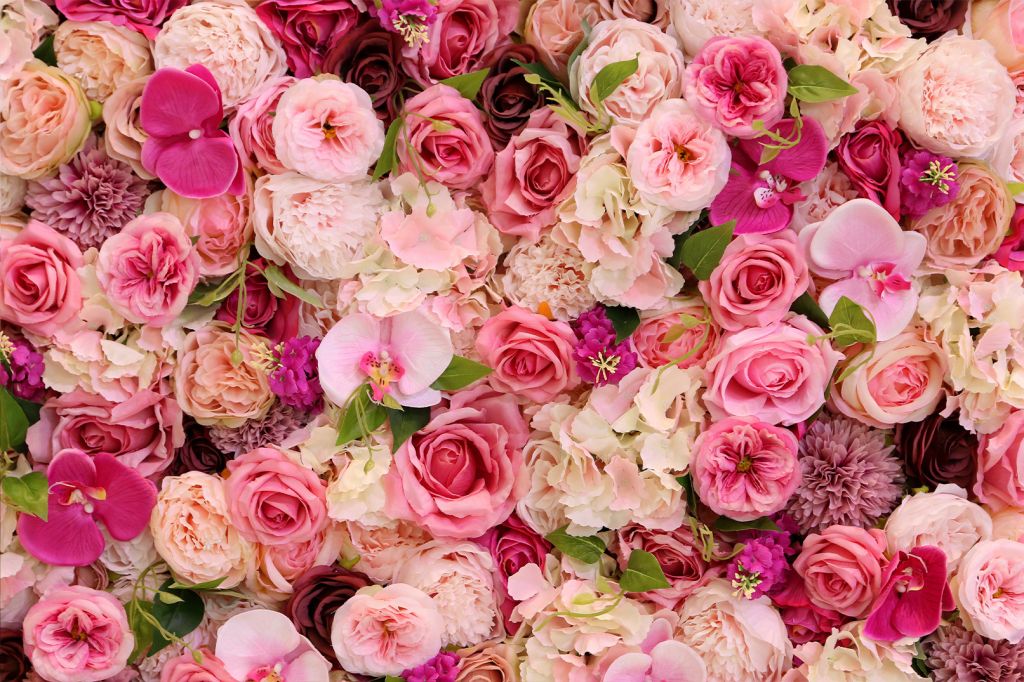
Choosing roses for your garden is strictly a matter of personal taste. Unlike much in the world today, you are free to add your individual imprint to your garden.
Most of us when selecting roses, usually think of the Hybrid Teas. Along with the Floribundas and Grandifloras, the trio is indeed considered the typical standard roses of the twentieth century. Yet all can trace their parentage to the Hybrid Perpetual Rose and the efforts of breeders to improve on that form during the 1700’s and 1800’s. Primarily rose growers sought to produce a repeat-blooming rose, rather than the single-blooming type of the hybrid Perpetuals. The search was a lengthy process. In fact, it was not until the 1860’s that the first Hybrid Tea rose gained recognition. The La France rose, developed by Giullot in 1867, was given the honor of being the first Hybrid Tea rose. It was silvery pink with pointed buds and, by the standards of the day, had rather large blooms. Most, if not all of those early Hybrid Tea varieties are no longer available, but thanks to the ongoing efforts of hybridizers over the past 300 years, we have a wide range of choices for our gardens today.
Hybrid Tea Roses
The Hybrid Tea is considered the classic rose, with long stems and large repeating blooms. The blooms display a tight pointed center, with the petals flowing towards the outer edges. Colors are red, white, yellow, and even blends such as orange and mauve. Several interesting bi-color roses have been developed recently: the blooms have one color on one side of the petal and a contrasting one on the other. There are some roses that have contrasting freckles or stripes on the bloom. In recent years, several hybridizers have concentrated their efforts on producing a blue rose, which has been met with some degree of success. One color that has never been achieved is a black rose (although one can’t imagine such a rose if it is developed, ever finding a place in most rose gardens!). The Hybrid Teas are ideal as a cut flower for the home, usually cut when the bloom is 1/2 to 3/4 open. Because of it’s striking flowers and repeat-blooming patterns, the modern Hybrid Tea rose has earned a rightful spot in every garden, be it large or small.
Floribunda Roses
Like the name implies, the Floribundas are abundant bloomers, producing bouquet-size clusters throughout the growing season. They were first developed in 1911 by the Poulsen family in Holland, bred by crossing Hybrid Teas with Polyantha bushes. The abundant blooms may be tighter like their Hybrid Tea parent, or pom-pom shaped like their Polyantha parentage. In general the Floribundas are more compact than the Hybrid Teas, although there are a few exceptions. Their growing habit makes them ideal as a massed bedding rose along walkways and borders. Because of the effect they create they are often referred to as landscape roses. The color selection in this class is almost endless and new introductions each year add to their growing popularity.
Rosa Rugosas
Rosa rugosas are hardy and vigorous. They thrive under conditions which other roses cannot tolerate. They are informal and look best in a country garden or in a mixed perennial garden.
English Roses
English roses are crosses between old and modern roses. The most famous were popularized by David Austin. They have a beautiful old-fashioned form and a very rich fragrance. They are quite vigorous — any rose which has survived centuries as a species must be! These roses are beautiful in informal gardens, especially the “cottage garden” look.
Climbing Roses
Climbing roses can add depth to your garden along fences and trellises, or entwined in an arbor. The blooms are similar in size to the flower of the Hybrid Teas and Floribundas. Growing to a height of 20′ at maturity in some locales, they are an eye catching sight as evidenced by the abundant red blooms of the old-timer Imperial Blaze, still popular and found in many gardens today. They are winter hardy in most areas and, with some moderate spring pruning, should last for many years.
Miniature Roses
These little gems rarely grow beyond 12 inches and are abundant repeat bloomers. With small scale blooms, either Hybrid Tea or pom-pom in appearance, they are ideal plantings for borders or window boxes, or planted singularly in pots and placed along a patio. They can last many years with conscientious pruning and winter protection where needed.
Standard or Tree Roses
The bright blooms of these plants on a 4′ tall stem are certainly an attention getter when placed along a driveway or as accents in a garden. Most standards are Hybrid Teas grafted to a single stemmed under stock rose and provide the same color scheme as the bush variety. Standards do require some extra care, both in planting and in winter protection.
Watering
Roses need good drainage. Roots should never sit in water! The best way to water roses is with a soaker hose. Soaker hoses produce a gentle trickle of water that soaks the soil thoroughly. Sprinklers are fine as long as the roses receive enough water so that the water soaks through the top 6 inches of soil and the leaves can dry quickly. If you must use a sprinkler, water early in the morning so that the foliage has a chance to dry — this discourages disease.
Fertilizing
After roses are in full leaf, apply fertilizer, following label directions: fertilize every 3-4 weeks with Rose-tone®, from when they come into full leaf until August. Use muriate of potash in August and September to build strong canes and buds for next year. Do not fertilize in late fall.
Pruning Tips
Prune lightly in fall to prevent snow and ice breakage. Prune no more than 1/3 of long canes. In early spring, cut back hybrid teas, floribundas, and grandifloras to 8-10″. Selectively prune shrub roses and climbers. If you have any questions, ask a Rutgers Nursery professional.
Site Selection Please take time to prepare your planting area. In return you will receive a lifetime of enjoyment. In…
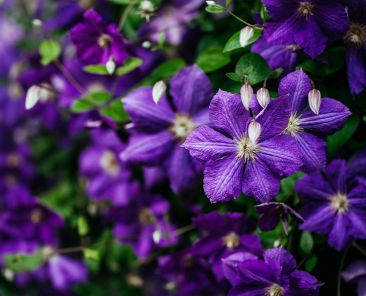
When planting clematis a little extra effort in preparing a good home for it will solve many problems. The hole…
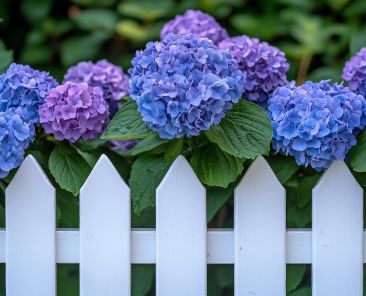
Hydrangeas are one of the many old-fashioned shrubs that are enjoying new found popularity. Their bold foliage provides interest while…