
Transforming a 200-year-old Victorian House In 1990, Jim Brophy purchased the recently renovated 200-year-old landmark house that is the home of Rutgers…


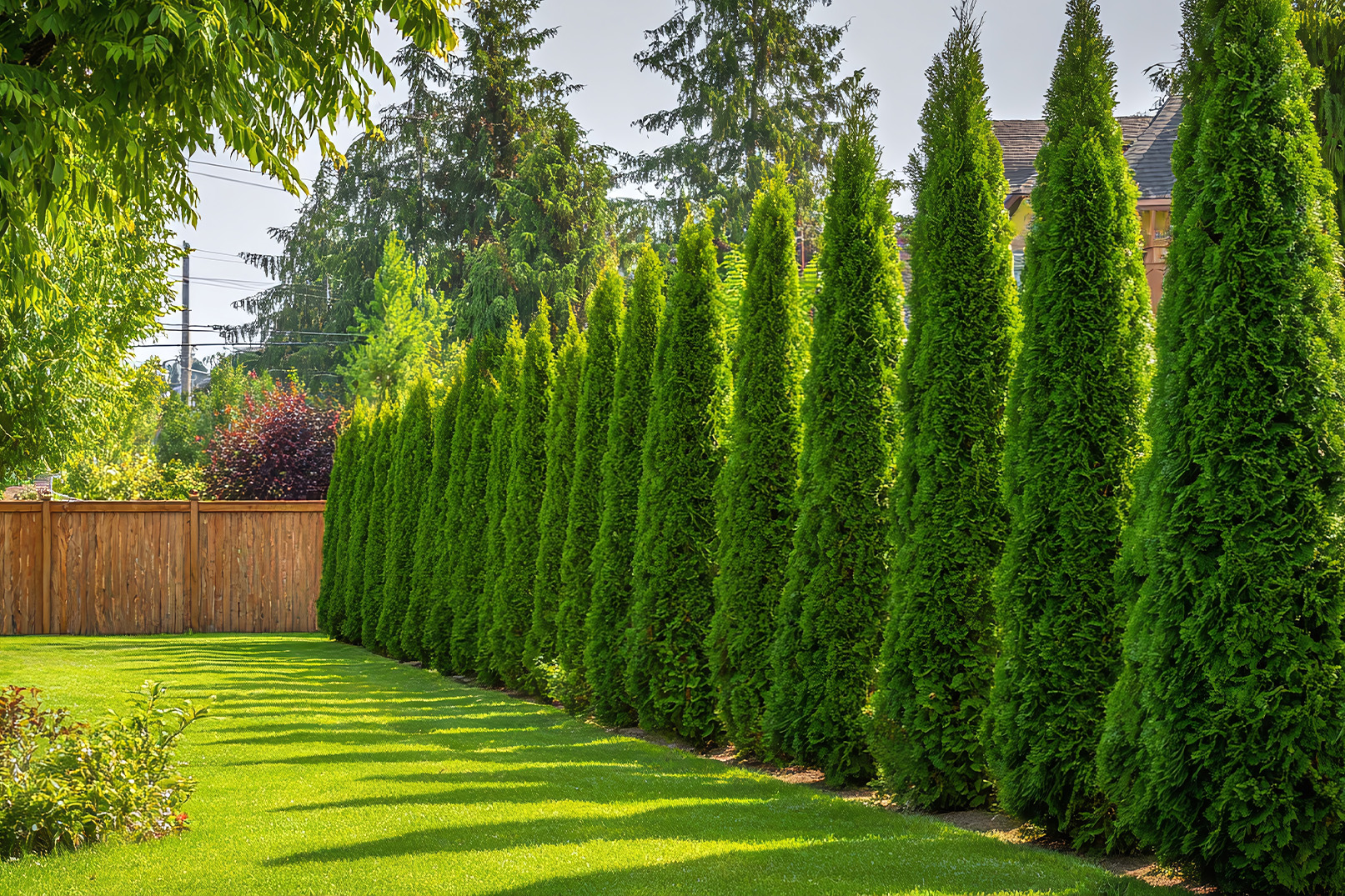
A more private patio, a greener property line or a view of the garden instead of the road: a well-planned privacy screen can change how you use your outdoor space. Choosing the right plants starts with the view you want to block and the room you have available.
For sunny sites with generous space, Green Giant arborvitae is a fast-growing evergreen option. Skip laurel can suit a lower screen with some shade. Upright hollies offer another shape to consider, while Norway spruce and tree-form Cryptomeria need substantial room. The best choice also depends on drainage, deer pressure and how quickly you need coverage.
At Rutgers Landscape & Nursery in Ringoes, NJ, we help homeowners compare screening plants and plan landscape projects. If you are coming from New Hope or elsewhere in Bucks County, bring a garden photo, a few measurements and a description of the view you want to soften.
Plan your screening visit or start a landscape design inquiry for a longer boundary, difficult site or complete outdoor-space plan. Ask about current varieties and sizes before choosing plants; the examples below are not a live inventory list.
Before shopping, answer five questions:
These are approximate mature sizes for the named plants, not the size of nursery stock or a recommendation to plant at that distance. Cultivars and growing conditions can change the final dimensions. Some are chosen for fast growth; others offer a better fit for a particular space.
| Plant | Height × width | Light | Moisture and maintenance |
| Green Giant arborvitae Thuja Green Giant |
40–60 ft × 12–18 ft |
Full sun to part sun | Moist, well-drained soil. Large evergreen screen; allow substantial width. |
| Skip laurel Prunus laurocerasus Schipkaensis |
10–15 ft × 5–7 ft |
Sun to shade | Moist, well-drained soil. Broadleaf hedge; consider winter exposure. |
| Dragon Lady holly Ilex × aquipernyi Meschick |
10–20 ft × 4–6 ft |
Sun to part shade | Moist, well-drained soil. Narrower evergreen form; confirm cultivar availability. |
| Norway spruce Picea abies |
40–60 ft × 25–30 ft |
Full sun preferred | Large landscape screen. Protect space for broad lower branches. |
| Japanese cedar Cryptomeria japonica |
50–70 ft × 20–30 ft |
Sun to part shade | Moist, well-drained soil. Species size shown; verify the exact cultivar. |
Green Giant can add three to four feet of height annually in optimal conditions, according to NC State Extension. Treat that as potential growth, not a promise for a newly planted tree. Its dense, low-branching habit makes it useful for screening, but its mature width can overwhelm a narrow bed. It is not a substitute for a compact arborvitae cultivar.
Ask our nursery team to compare the exact arborvitae varieties available, their present width and their eventual footprint. Where deer are common, discuss protection rather than relying on a resistance label alone.
Skip laurel provides glossy evergreen foliage and can tolerate more shade than many conifers. It works well as a candidate for a lower hedge where a large screening tree would be excessive. Choose well-drained soil, and discuss winter wind exposure before planting. Leave enough width for the shrub to fill out; repeated hard pruning should not be the plan for making an oversized plant fit.
Holly is a broad plant group: a low Japanese holly and a tall upright holly do very different jobs. Dragon Lady is an example of a narrower upright evergreen; check current cultivar availability before planning your hedge. Its typical mature width is four to six feet. Ask which available holly best matches your site and desired screen height. Berry production may require a compatible pollinator; confirm that separately from screening needs.
Norway spruce can create a substantial evergreen backdrop on a sunny site with plenty of space. Its broad base makes it better suited to large landscapes than tight side yards. Retaining healthy lower branches matters when the goal is ground-level privacy.
Cryptomeria adds a softer evergreen texture to a larger planting. Its species can become a very large tree, while named cultivars vary considerably. A dwarf Cryptomeria and a tree-form selection are not interchangeable. Confirm the tag, mature dimensions and local site suitability before using it as a screen.
Ask about screening plant availability. Include the planting length, available depth and the height you want to screen, so we can help narrow your options.
A growth-rate number does not tell you when your patio will feel private. Height gain and sideways growth are different, and a tree may be tall enough while leaving a gap between neighboring plants. Starting size, planting distance, establishment and site conditions all affect the result.
Compare actual plants at the nursery from the angle you need to screen. Larger stock can offer more coverage on planting day, but it needs careful installation and watering. Smaller plants may establish more readily and suit a phased budget. Avoid treating either choice as automatically faster in the long run.
If you need privacy immediately, ask a designer whether a fence, trellis or other permitted structure should provide initial coverage while plants develop. A layered plan can combine near-term privacy with a lasting planted landscape.
There is no single planting distance that works for every privacy tree. Spacing must account for the exact cultivar, mature width, current size, maintenance access and whether you want a clipped hedge or a natural screen. Measure from the center of one plant to the center of the next.
For perspective, a Green Giant with a potential 12-to-18-foot spread needs a different plan from a holly that may spread four to six feet. Buying more plants and crowding them together may close gaps sooner, but can create competition and maintenance problems later. Ask for a layout before purchasing a full row.
Set plants far enough inside your property to accommodate growth. Check property boundaries, utility locations, easements and local requirements before digging. For screening near a road or driveway, preserve safe sightlines.
Where space permits, combine compatible evergreen species and layer different heights. This can give the planting depth and reduce the chance that one pest or disease affects the entire screen. University of Maryland Extension recommends plant diversity for more resilient screening.
Keep evergreens in the locations where winter coverage matters. Deciduous shrubs can add flowers and seasonal interest in front, but their bare winter branches will not provide the same visual barrier. A mixed screen still requires thoughtful spacing and plants that suit the same site.
Discuss a privacy landscape plan if your screen needs to work with a patio, slope, lighting, drainage or existing trees.
No plant is deer-proof. Browsing depends on food availability, season and local deer behavior. Young growth can be particularly vulnerable. Read our deer-resistant plant guidance and ask about protection for the selections you are considering.
Fall can be a useful planting season, but timing is plant-specific. Broadleaf evergreens can be vulnerable to winter drying, particularly when planted late or in exposed positions. Ask whether your site and selection are better suited to early fall or spring. Postpone planting in saturated or frozen soil.
Plant at the correct depth with the root flare visible, and make the hole wide enough for root development. Keep mulch away from trunks and stems. Water based on moisture in the root ball and surrounding soil rather than following a calendar regardless of rain. New evergreens may need water during dry winter periods when the ground is unfrozen. Our planting and care resources provide more guidance.
Green Giant arborvitae is one option for a sunny site with ample space. Its rapid potential growth does not make it appropriate for every yard. For a smaller planting area, compare available laurels and upright hollies rather than choosing speed alone.
Skip laurel can be a candidate for shade, but the amount of light, drainage and winter exposure still matter. Describe the actual sunlight pattern to the nursery team. Do not assume that every evergreen tolerates deep shade.
Only if the chosen plants retain enough foliage through winter. Deciduous flowering shrubs provide seasonal coverage. Use them alongside suitable evergreens when winter screening is part of the goal.
Bring a photo of the view, the length and depth of your planting area, and notes about sunlight, drainage and deer. We can help you compare screening choices and current sizes before you commit to a row of plants.
Visit our nursery at 1051 U.S. Highway 202, Ringoes, NJ 08551. If you are planning a visit from New Hope, Bucks County or a nearby New Jersey community, check current hours and contact details first. Call or text 908-788-2600 to ask about the screening plants you want to compare.
Ready to solve privacy as part of a larger landscape project? Contact a Rutgers landscape designer and describe the area, your priorities and the view you want to screen.
Transforming a 200-year-old Victorian House In 1990, Jim Brophy purchased the recently renovated 200-year-old landmark house that is the home of Rutgers…
Heavy clay soils can be hazardous to many plants. If you think you have these conditions, a simple solution without…
It is springtime and you are driving down a street that is beautifully lined with ornamental Pear trees that are…