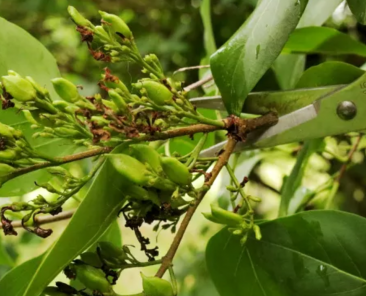
| Blackhaw Viburnum, or Viburnum prunifolium, is often overlooked at first glance beside its more selectively cultivated cousins in the Viburnum family. It lacks the dense, upright branching of Arrowwood and Chicago Luster, instead developing a more spreading form. Its flowers are not arranged in the dramatic double-file lacecap display of Shasta Viburnum, but rather in rounded, flat-topped clusters. Even its foliage is more understated, with smooth, rounded leaves that give rise to one of its common names, Smooth Blackhaw. Taken together, these traits can make Blackhaw seem more at home in a woodland edge than a carefully manicured backyard. Yet that natural character is exactly what makes it such a favorite among many landscapers.
Blackhaw Viburnum is a native shrub uniquely adapted to life beneath the canopy of our country’s woodlands. It offers three full seasons of interest: creamy white flowers in late Spring, deep red foliage in Autumn, and indigo berries that persist well into the season. Typically growing around 15 feet tall and wide, it can eventually reach 30 feet under ideal conditions and, with selective pruning, may even be shaped into a small specimen tree.
What truly sets Blackhaw apart, however, is its remarkable adaptability. As a native understory shrub, it tolerates more shade than nearly any other viburnum, making it an excellent choice for layered plantings beneath larger trees or along the shadier sides of a home. It is equally versatile in soil conditions, thriving across a broad native range that stretches from Texas to the Adirondacks of New York. Blackhaw tolerates wet sites and floodplain conditions, yet once established is also notably drought-tolerant thanks to its strong root system. Few shrubs combine this level of resilience with such ornamental value. |