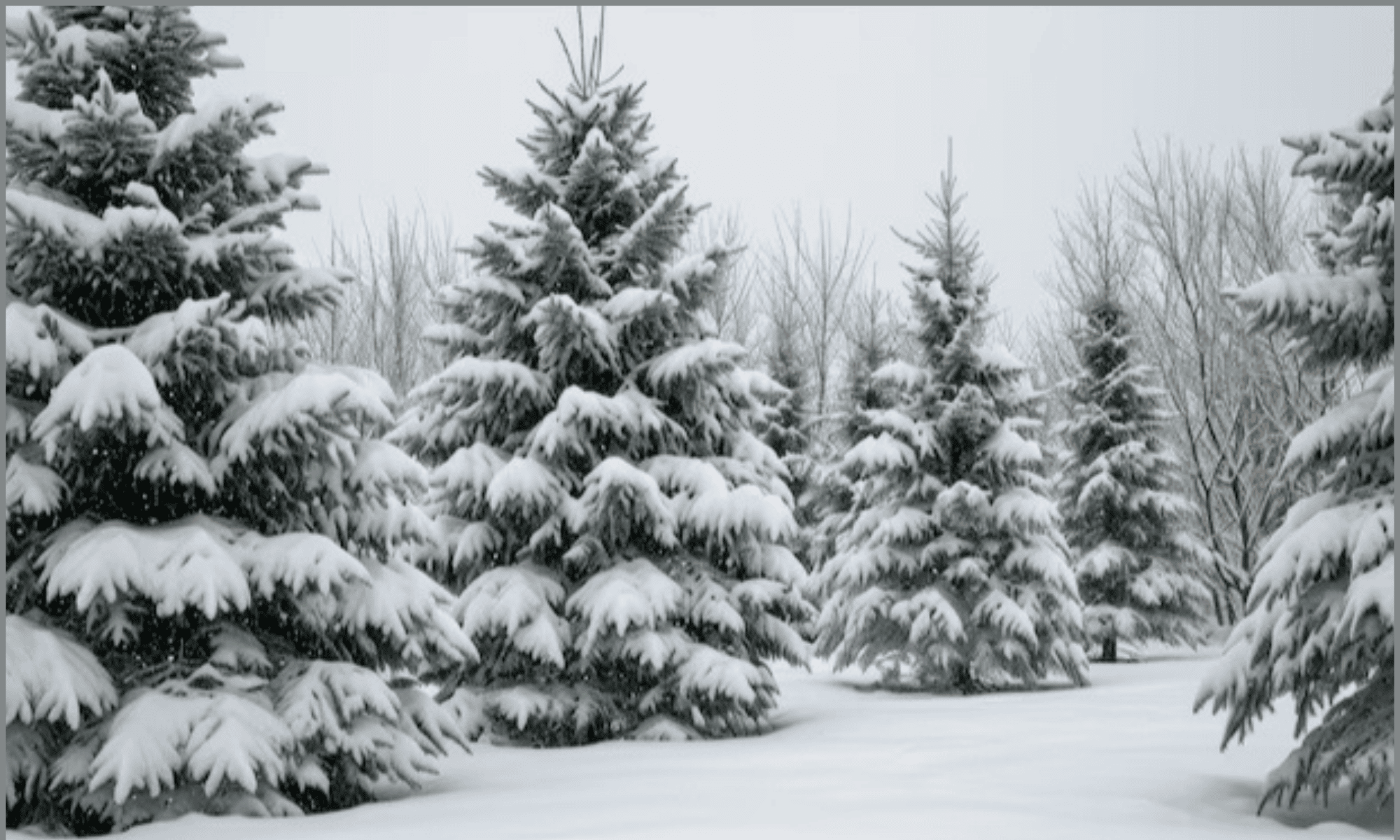
Winter snow can make a landscape look beautiful, peaceful and still, but heavy, wet snow can be hard on trees and shrubs. While a light layer may offer insulation, a dense buildup can bend, split, or snap branches under its weight.
Some plants handle snow better than others. Skip Laurels, for example, are quite resilient. Their flexible branches tend to bend and bounce back once the snow melts. In general, plants with more flexible bark and cambium layers recover more easily. Many broadleaf evergreens fall into this group. By contrast, species with rigid bark and more brittle inner layers can break when bent. Traditional needle evergreens often suffer more breakage because they are less flexible.
Shrubs planted under rooflines also face extra risk. Sliding snow or ice can fall with force and crush plants below. After a heavy snowfall, walk your property and assess the damage. Look for broken limbs, cracked stems, or badly bent branches, and plan to prune damaged areas in late winter.
If you remove snow, do it gently. Brush heavy snow off shrubs and small trees with an upward motion, starting at the bottom to avoid adding weight to lower branches. Evergreens can often be lightly shaken to release loose snow. Only clear snow if it comes off easily. If branches are iced over, leave them alone and let natural melting occur. Trying to knock off ice usually causes more harm than good.
When conditions improve, prune damaged branches and remove dead wood from woody shrubs and trees. And always put safety first. Never stand beneath large limbs or trees weighed down by snow.