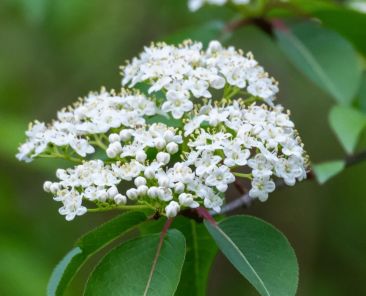
A summertime classic: magnificent, showy, long-lasting blossoms, often flowering from mid- to late-summer. Choices range from traditional pompoms, architectural lace-caps, dwarf, climbing, or tree varieties. Spectacular in the summer garden, hydrangeas also make stunning cut flowers (fresh or dried). Many provide beautiful autumn display and blooms left to dry on the branches create winter interest.
Standard care includes deer protection. Natives, oak-, and small-leaved varieties are less browsed by deer.
Flower Style
Mophead—produce large, rounded clusters made up of hundreds of florets.
Lace-caps—characterized by flat flower clusters with a ring of larger flowers surrounding the center of smaller florets.
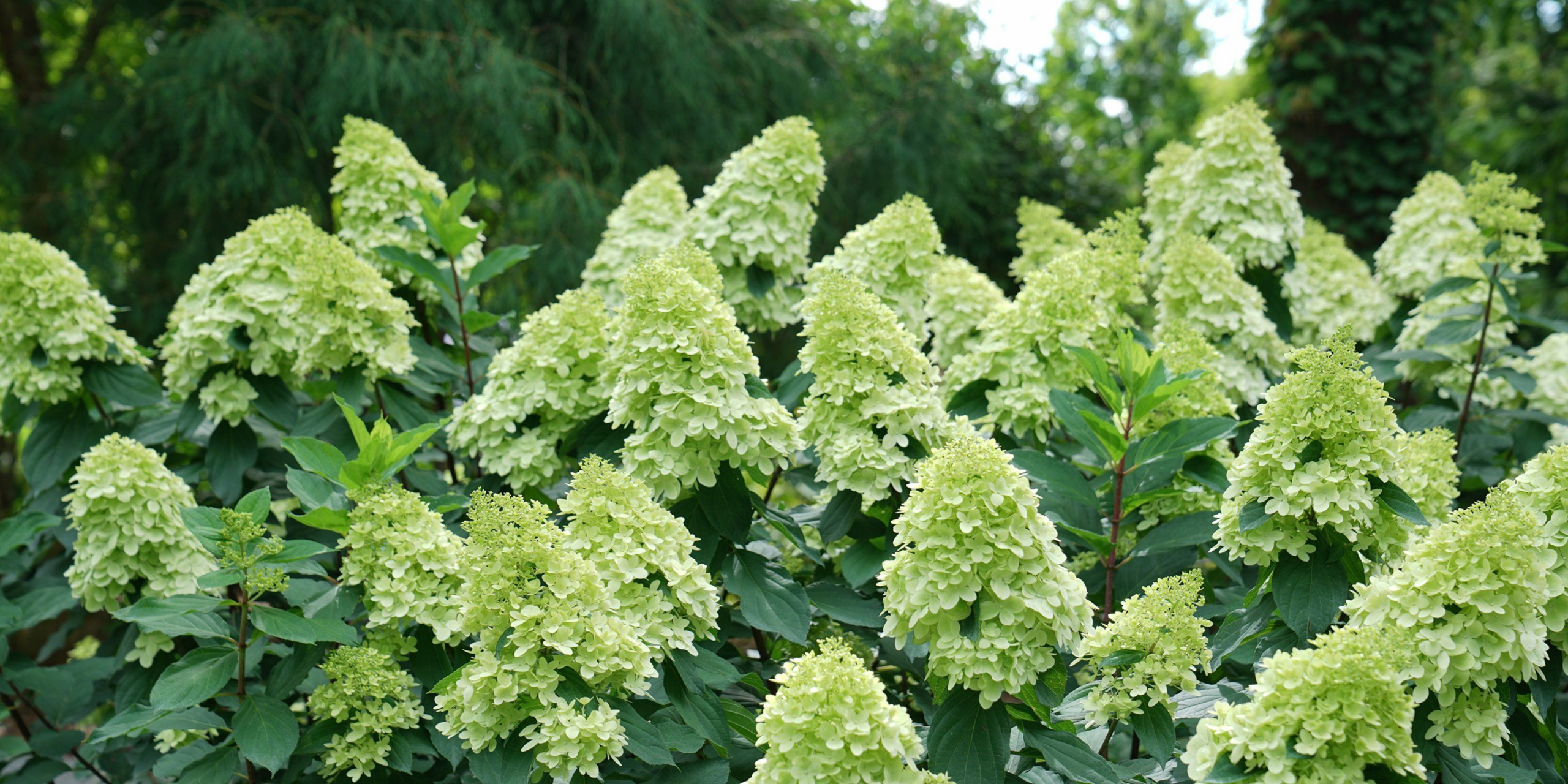
Panicle—these include our native varieties: the quercifolias (oak leafs) and the paniculatas, with large white, cone-shaped clusters. The flowers start out white, but many varieties fade to various shades of pink as they mature.
Smooth—or wild hydrangea, are known for their large creamy white blossoms. Early blooms are green in color, turning to white as they mature.
Flower Color
Flower color (except the white varieties) is influenced by the pH of the soil. People often buy this shrub for a specific color only to be surprised by a different bloom color in successive years. If you have acidic soil your flower will tend to be blues. Neutral soils generally produce pale flower colors. Alkaline soils make pink or reddish tones. These colors can be encouraged or reversed within certain varieties. You’ll need to begin to treat the soil well before the blooms start to emerge from the tips of the plant for the color to be affected.
Water and Light
Hydrangeas love water—keep your plants mulched and well watered. Mulching helps to keep roots cool and can supply nutrition. Plants benefit from moist, fertile soil that does not dry out. Afternoon shade can help minimize wilting in hot locations and can extend the length of the blooms.
Fertilizing and Feeding
Hydrangeas are heavy feeders, so will benefit from additional nutrients. Slow-release or organic products are best because they deliver nutrients slowly over an extended period of time. Extra nutrients should be applied early in the season when the plants are just leafing out. This makes food available when plants gain the most benefit. Do not fertilize in late summer; a fall application can be done when the leaves have dropped.
Pruning
If hydrangeas don’t bloom for a season, it is usually due to one of four reasons:
1. They didn’t get enough sun.
2. An early frost or cold spell killed the buds.
3. Too much old wood is preventing new blooms (seen with older plants).
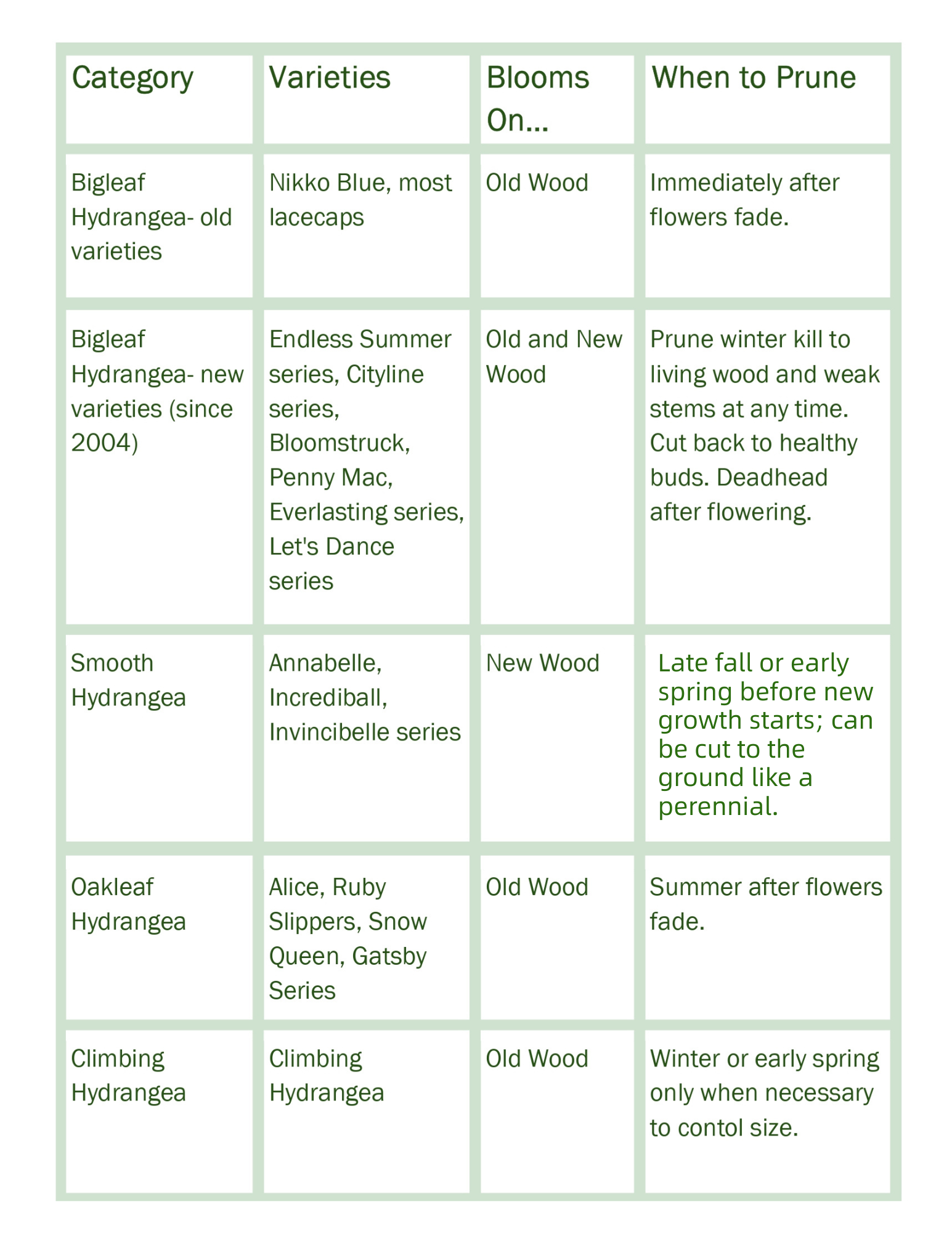
4. They were pruned at the wrong time. The type of hydrangea you have will determine how and when you prune—see the following chart.